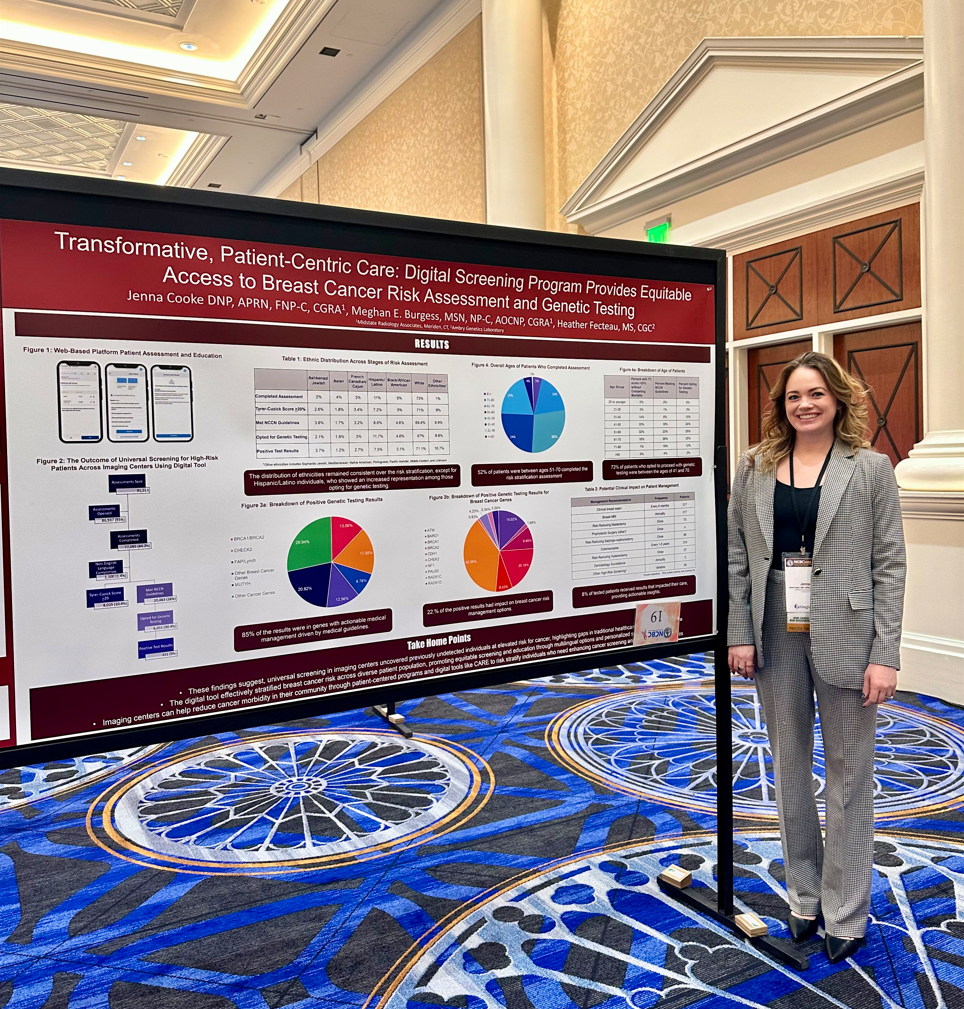
 Midstate Radiology Associates, LLC was recognized at the NCBC 34th Annual Interdisciplinary Breast Cancer Conference for its leadership and innovative efforts to increase access to genetic testing and hereditary cancer risk assessment.
A New Approach to Risk Assessment
The initiative is part of Midstate Radiology’s Hereditary Cancer Risk Assessment (HCRA) Program, which originally launched in 2017 at three MRA sites and has since expanded to 14 locations.
“Our program demonstrates our passion for empowering every patient with a clear understanding of their individual lifetime personal cancer risk. We strongly believe that by guiding our patients to take proactive steps towards prevention and overall personal cancer risk reduction, we are saving lives,” said Tom Cappas, MBA, MS RT (R)(MR), Chief Operating Officer, Midstate Radiology Associates, LLC.
In 2021, Midstate Radiology partnered with Ambry Genetics to further enhance the patient experience and launched the CARE Program in 2023. This digital screening tool identifies patients who may be at higher risk for breast cancer and genetic mutations linked to hereditary cancers. It’s available in five languages and is distributed via text, email or at the time of a patient’s mammogram.
“We know that breast cancer screening disparities still exist, especially for underserved communities,” said Cooke, co-author of the study. “Our goal was to create a universal, patient-centered approach that could identify high-risk individuals early, regardless of language, background or location.”
More than 91,000 assessments were completed between November 2023 and December 2024. The study, which was published in The European Journal of Breast Health, showed that 26% of participants met criteria for genetic testing and 85% of positive results were in genes with medically actionable outcomes. Notably, Hispanic/Latino individuals were more likely to opt in for testing, highlighting an increase in engagement among historically underserved populations.
“By offering screening in multiple languages and at the point of care, we’ve made genetic testing more accessible, understandable and immediate,” added Cooke.
What Patients Are Saying
Patients have responded positively to the tool’s ease and accessibility. Having the option to test immediately helps them understand its importance and reinforces that their time and health are valued.
“The feedback we get all the time is that it’s so convenient,” said Meghan Burgess, MSN, NP-C, AOCNP, CGRA, Director of Screening & Preventative Services. “Patients are already at their mammogram appointment. They fill out the questionnaire, have a quick conversation with the technologist and can move forward with testing right then and there. It’s seamless, straightforward and user-friendly.”
In addition to convenience, affordability has played a key role. “Cost has historically been a barrier, but with this program, testing is more transparent and financial assistance is available,” Burgess added. “Many people who never considered genetic testing before are now taking advantage of it and sharing their experience with family members.”
Providers have also praised the program for streamlining communication and offering timely answers.
With overwhelming results and such a strong community response, Midstate plans to build on this success and expand access even further.