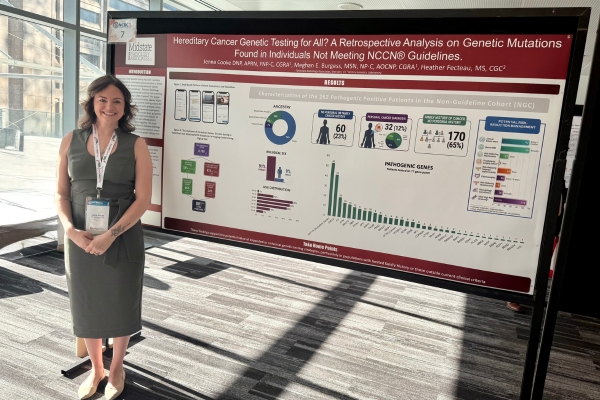
 Midstate Radiology Associates, LLC is proud to announce that our Hereditary Cancer Risk Assessment (HCRA) Program received national recognition at the 2026 National Consortium of Breast Centers conference. Our program’s research was selected as one of four award winners out of 42 accepted abstracts submitted by medical professionals across the country.
The abstract, titled “Hereditary Cancer Genetic Testing for All? A Retrospective Analysis on Genetic Mutations Found in Individuals Not Meeting NCCN® Guidelines,” was also presented at the conference.
This honor highlights MRA’s continued leadership in expanding access to hereditary cancer screening and identifying more patients who may benefit from earlier detection and personalized care.
Award-Winning Research from the HCRA Program
The research was authored by Jenna Cooke, DNP, APRN, FNP-C, CGRA; Meghan E. Burgess, MSN, NP-C, AOCNP, CGRA; and Heather Fecteau, MS, CGC.
The study reviewed nearly four years of data collected across MRA sites, focusing on patients who underwent genetic testing for hereditary cancer between November 1, 2021 and October 20, 2025. The goal was to better understand how often patients who did not meet current NCCN® guidelines still tested positive for a hereditary cancer-related mutation.
The takeaway is important for both patients and providers: genetic testing may help more people than current guidelines alone would suggest, even without a strong personal or family history of cancer.
What the Research Found About Hereditary Cancer Genetic Testing
A total of 8,100 patients chose to pursue hereditary cancer genetic testing during the study period. Of those patients, 58% met NCCN® guidelines, while 42% did not.
Among all patients tested, 801 were found to have a pathogenic mutation. Notably, 262 of those patients did not meet NCCN® guidelines for hereditary cancer genetic testing.
That means a substantial number of patients who would not typically qualify for testing still learned they carried a genetic mutation that could affect their care for life. In many cases, those results led to important changes in medical care, including additional screenings, advanced imaging and risk-reducing surgeries.
Put simply, the research showed that expanding access to genetic testing can help identify at-risk individuals who might otherwise go undiagnosed.
Why Expanded Genetic Testing Matters
By looking beyond standard eligibility criteria, care teams may be able to detect inherited cancer risks earlier and give patients more information to guide future medical decisions. It can also open the door to more personalized care based on an individual’s risk.
This research supports a broader, more inclusive approach to cancer risk assessment that may improve outcomes and help more patients access important health information sooner.
Leadership in Innovative and Equitable Hereditary Cancer Care
This recognition reflects our commitment to innovation and improving access to hereditary cancer care. By expanding genetic testing beyond NCCN® guidelines, MRA is helping reshape the future of cancer risk assessment and screening.
As Jenna Cooke shared, “This award shows that MRA is leading the way in screening patients for hereditary cancer syndromes. It highlights our innovative approach to genetic testing, expands access for more patients, and helps identify risks earlier.”
We are honored to see this work recognized on a national stage and remain committed to delivering forward-thinking care that supports patients, providers and communities across Connecticut.